Formal vs Informal Wedding Invitation Examples 2026 — Which Style Is Right for You?
One of the first decisions you'll make when planning your wedding invitation is the tone. Should it be formal — third person, traditional, and dignified? Or informal — first person, conversational, and warm? The answer isn't just about personal preference — it's about your wedding's style, your guest list, and what message you want to send before anyone even walks through the door.
This guide breaks down the key differences between formal and informal wedding invitations with 10+ real examples for Indian weddings in 2026.
Key Differences: Formal vs Informal Wedding Invitations
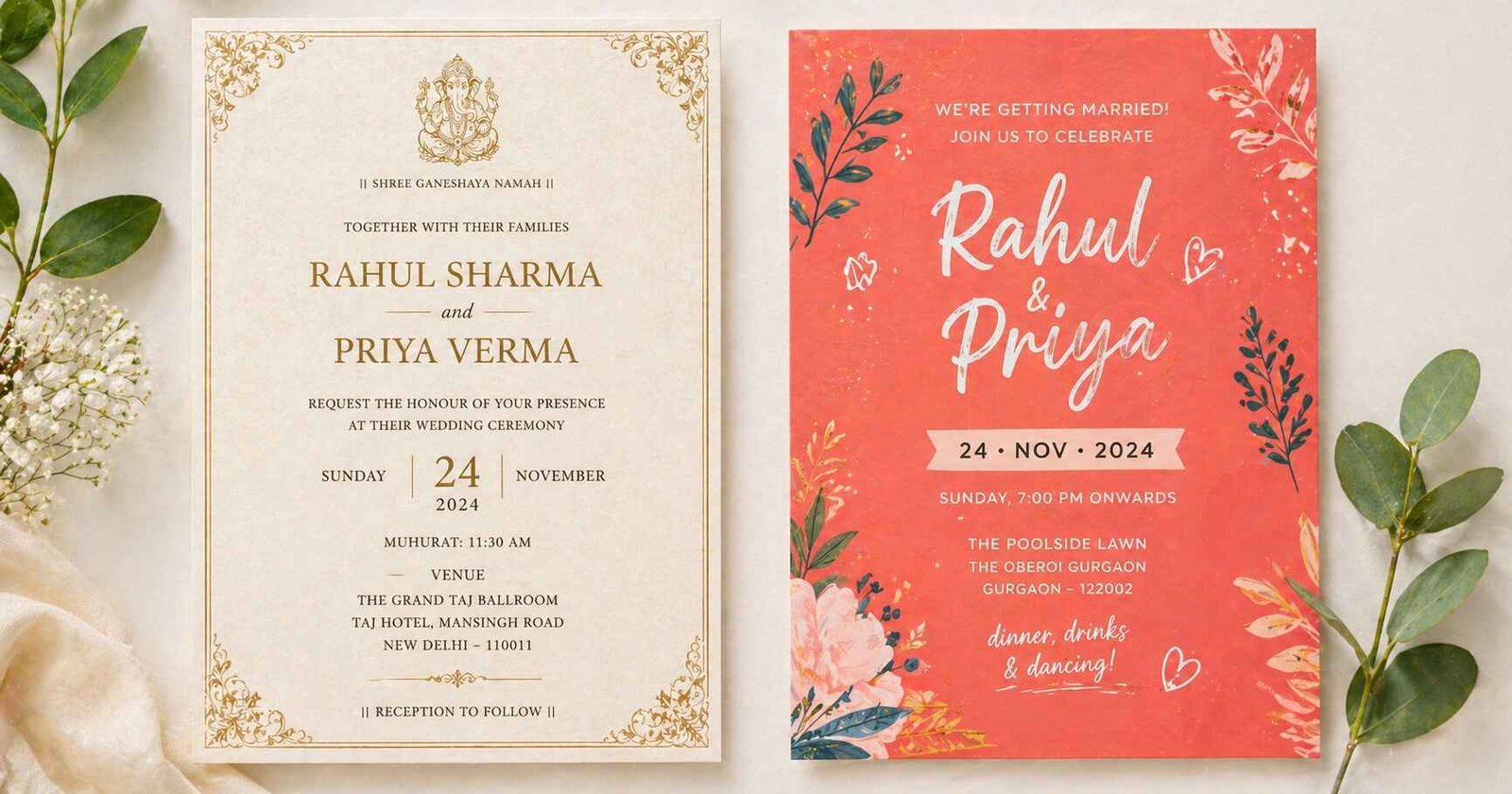
Formal Wedding Invitation Examples
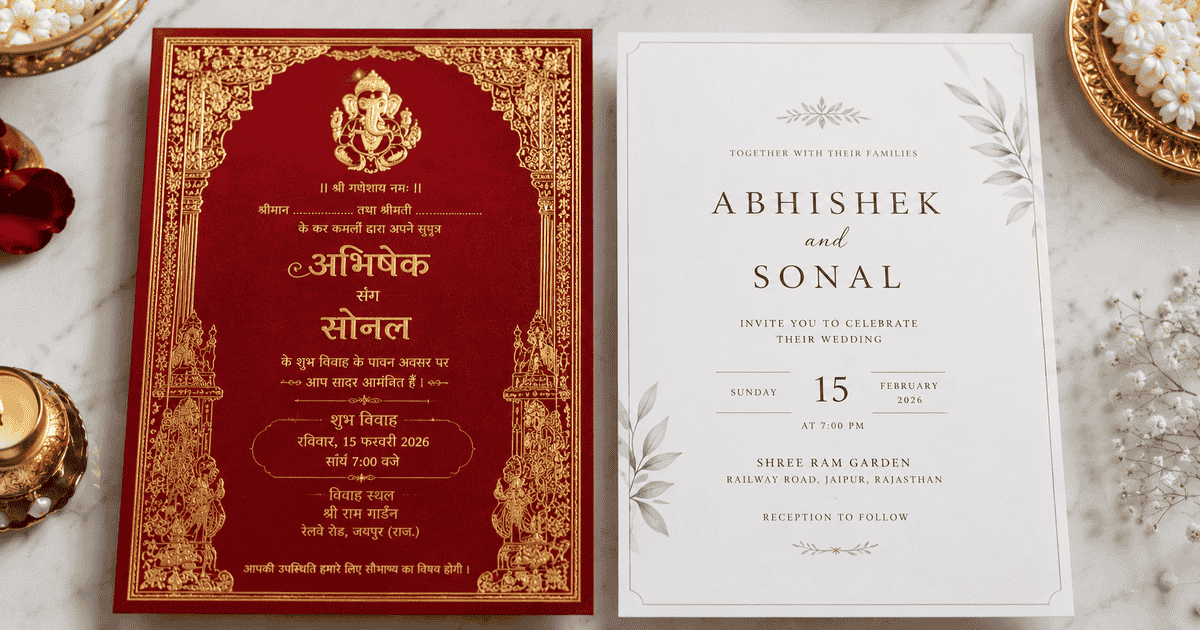
Example 1 — Traditional North Indian (Formal)
Shri Ganeshay Namah

Mr. Suresh Kumar Agarwal & Mrs. Lata Agarwal
request the honour of your presence
at the wedding of their daughter

Priya Agarwal

with

Ankit Sharma
son of Mr. Rajesh Kumar Sharma & Mrs. Sunita Sharma

Sunday, the 22nd of February, 2026
Shubh Muhurat: 11:15 AM to 1:00 PM

Siddhi Vinayak Banquet Hall
Ring Road, Lucknow — 226001

Reception: 8:00 PM onwards | Same Venue
Kindly RSVP by 10th February
Example 2 — South Indian Formal
Srimathe Ramanujaya Namaha

T. Venkataraman & Smt. Meenakshi Venkataraman
cordially invite you to the Vivaham of their daughter

Deepa
with
Karthik Subramaniam
son of Shri S. Subramaniam & Smt. Padmavathi

Muhurtham: Saturday, 7th February 2026 | 9:30 AM
Sri Saraswathi Kalyana Mandapam, T. Nagar, Chennai
Tip: Formal invitations work best when parents are prominently involved in hosting and when the guest list includes elders, business associates, and community leaders who expect a certain level of decorum. The third-person voice signals "this is an occasion to be taken seriously."
Informal Wedding Invitation Examples
Example 3 — Modern Indian Couple (Informal)
Hey! We're getting married.

After three years of arguing about restaurants and finishing each other's sentences,
we decided to make it official.

Priya & Rahul
7th March 2026 | 6:30 PM
The Taj Mahal Hotel, Mumbai

Ceremony at 7 PM | Dinner & Dancing from 8 PM
RSVP: priyaandrahul2026@gmail.com
Example 4 — Destination Wedding (Informal)
We're getting married in Goa. 🌊
And we really, really want you there.

Ananya & Dev
28th February 2026 | Sunset Ceremony at 5:30 PM
Leela Goa Beach Resort, Cavelossim

Come for the wedding. Stay for the vacation.

RSVP & accommodation info: +91 98765 XXXXX
Example 5 — Intimate Home Wedding (Informal)
Some things are better kept small and full of love.

We're getting married at home — just our closest circle.

Nisha & Vikram
Sunday, 15th March 2026 | 11:00 AM
45, Shanti Nagar, Jaipur

Ceremony followed by lunch. Please come.
Semi-Formal: The Middle Ground
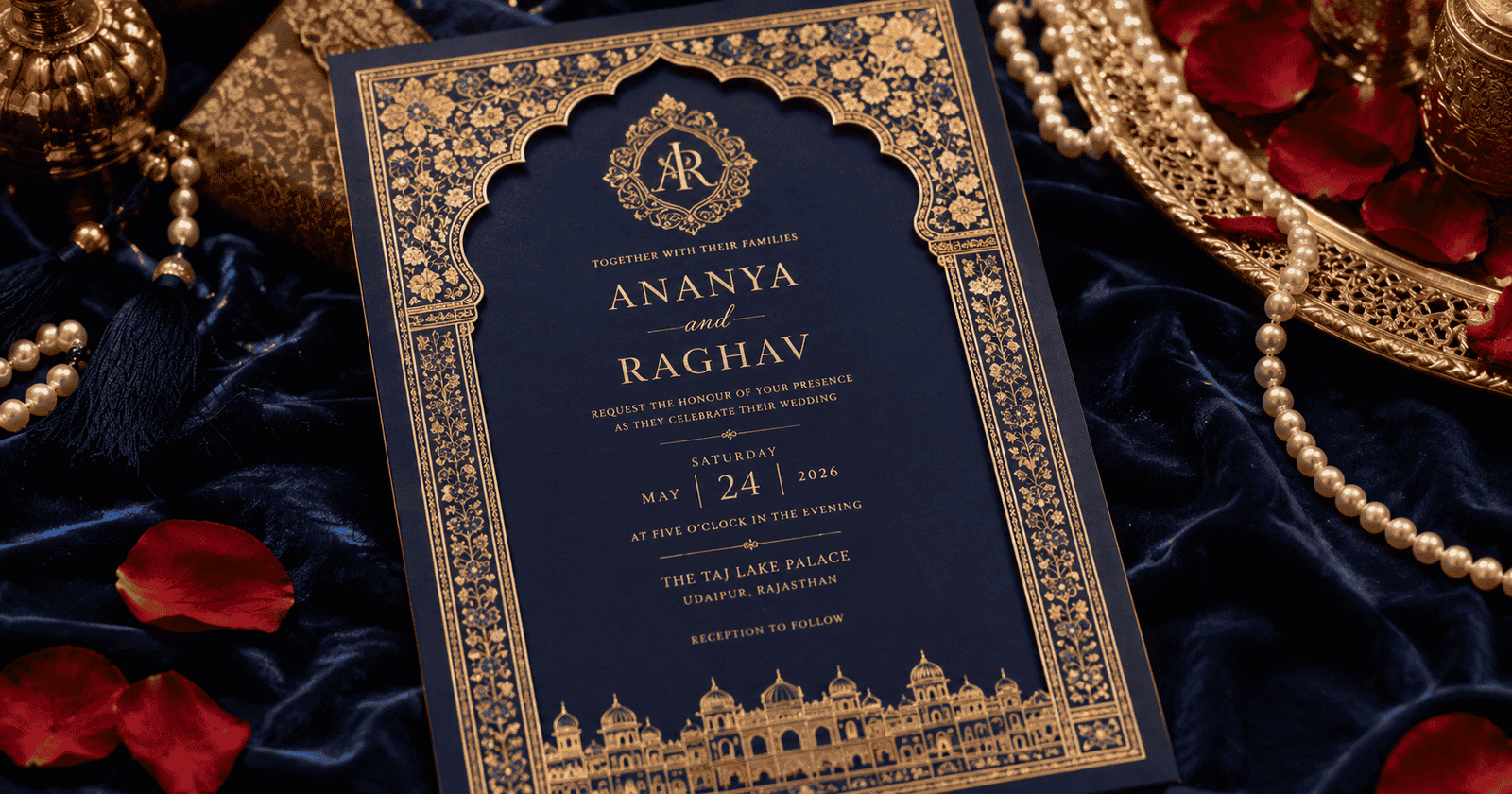
Many Indian couples in 2026 opt for a semi-formal tone — warm but respectful, personal but not casual. This is perfect for weddings where both traditional elders and young friends are invited.
Example 6 — Semi-Formal (Both Families Mentioned)
With the blessings of God and our families,

Sneha Verma & Rohan Mehta
invite you to the celebration of their wedding

Saturday, 21st February 2026
The Grand Palace, Bengaluru

Ceremony: 6:30 PM | Dinner: 8:00 PM

We would be honoured by your presence.
RSVP: +91 99887 XXXXX
Key Takeaway: Semi-formal invitations mention both families and use "invite you" rather than "request the honour of your presence" — slightly less formal but still dignified. This tone works beautifully for love marriages where both sets of parents are equally involved.
When to Choose Formal vs Informal
Choose Formal if:
- Your wedding has 300+ guests including elders and extended family
- Parents are the primary hosts
- It is an arranged marriage with traditional ceremonies
- Your guest list includes business contacts, community leaders, or VIPs
Choose Informal if:
- Your wedding is intimate (under 100 guests)
- You and your partner are self-hosting
- It is a love marriage or destination wedding
- Your primary guests are close friends and young family members
Can You Mix Both Styles?
Absolutely. Many couples send a formal printed card for elders and official invites, and an informal digital card via WhatsApp for friends. This dual-card approach lets you honour tradition while expressing your personality — and it works beautifully.
Create Your Own Invitation in Minutes
Whether you want formal elegance or casual warmth, einvits.com has templates for every style. Design your wedding invitation, choose your tone, and share it in minutes — free to get started.
Get Started FreeFinal Thoughts
There is no single "correct" tone for a wedding invitation. What matters is that your invitation accurately represents the experience your guests can expect — and that it feels authentically like you. Use the formal/informal spectrum as a guide, not a rule. The best invitation is the one that makes your guests feel genuinely invited.