Modern vs Traditional Invitation Designs — Which Is Right for Your 2026 Wedding?
When planning your wedding invitation in India, one of the most fundamental questions is: modern or traditional? The answer isn't as simple as preference — it involves your family's expectations, your community's norms, the wedding's scale, and most importantly, what feels authentically like you.
This guide compares modern and traditional wedding invitation designs across every key dimension — with real examples, pros and cons, and expert guidance for making the right choice.
What Is a "Traditional" Indian Wedding Invitation?
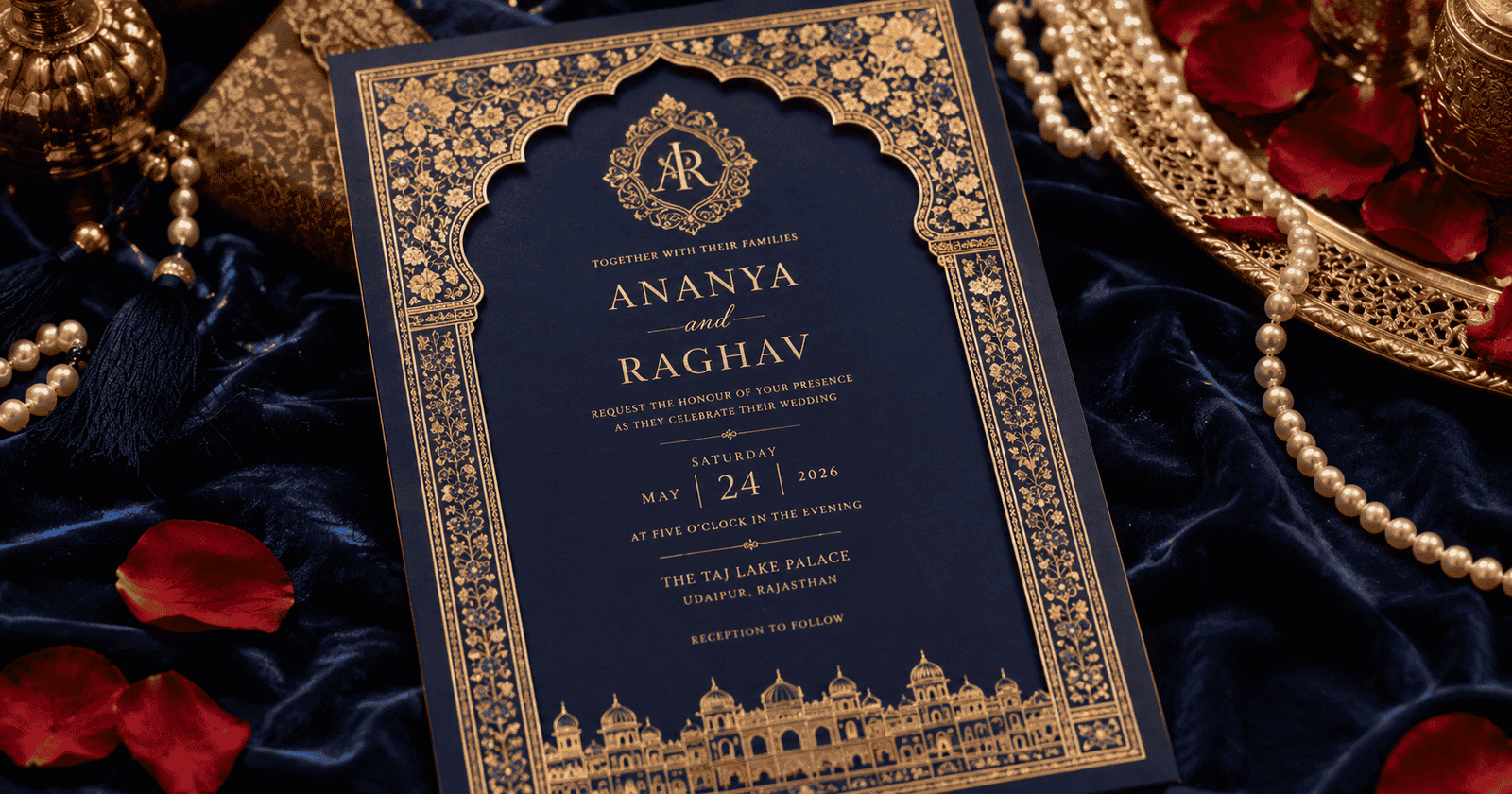
A traditional Indian wedding invitation is characterised by:
- Religious invocation at the top (Om, Bismillah, Waheguru)
- Rich colours — red, gold, maroon, saffron
- Ornate borders — floral, temple motifs, paisley, mandala
- Formal third-person language
- Multiple inserts — main card, sub-event cards, RSVP slip
- Heavy, quality paper stock when printed
- Religious or cultural symbols (Ganesha, crescent moon, cross)
- Parents as primary hosts
What Is a "Modern" Indian Wedding Invitation?
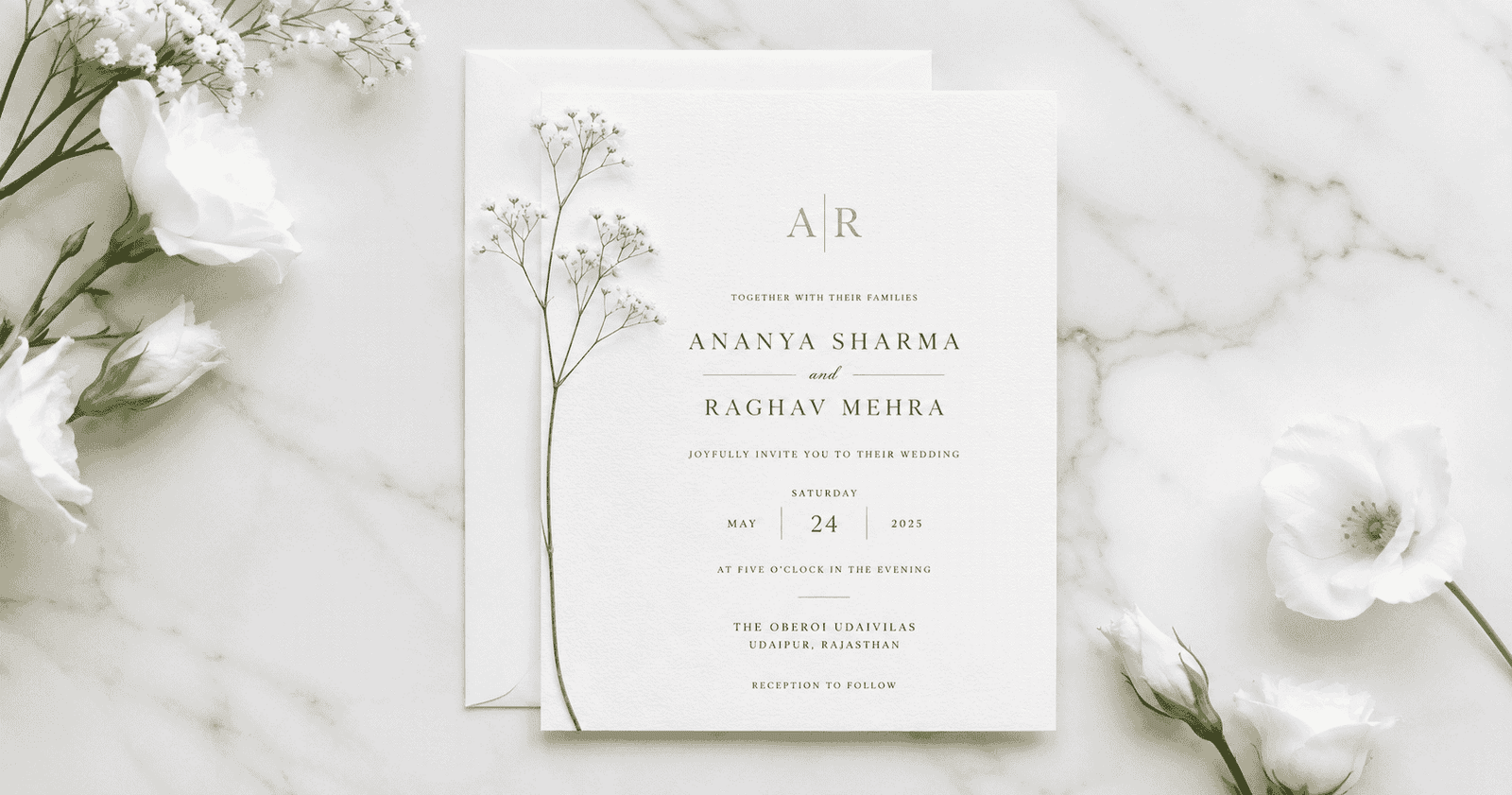
A modern Indian wedding invitation features:
- Neutral or contemporary colour palettes (white, navy, blush, sage)
- Clean typography — often a single elegant font
- Minimal decoration — one botanical element or none
- First-person language — "We're getting married"
- Single-page design with all information on one card
- Couple as primary hosts
- Digital-first format
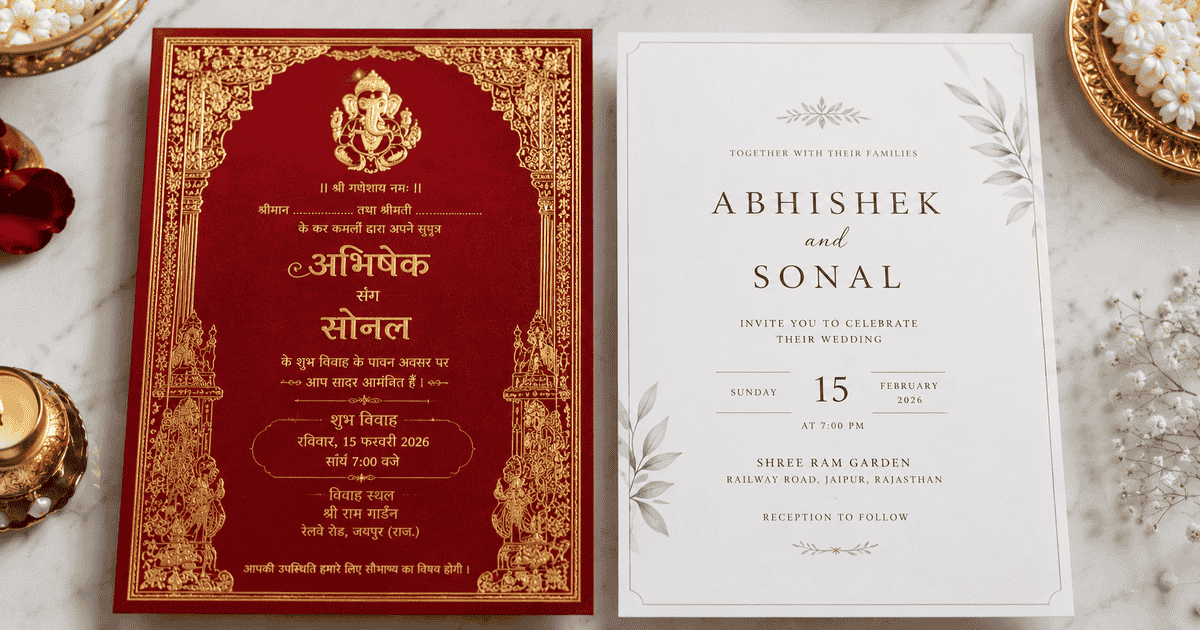
Side-by-Side Comparison
Tip: The best Indian couples in 2026 don't choose between modern and traditional — they understand that different guests need different things. Send a traditional card to elders and VIPs; use a modern digital design for friends and WhatsApp distribution. One wedding, two invitation styles.
Real Examples
Example 1 — Traditional Works Best
A large arranged-marriage wedding in Kanpur with 600 guests, including numerous community elders, prominent business families, and a Pandit as a key guest. The family chose a deeply traditional card — red and gold, Ganesha motif, Devanagari Hindi, and the groom's father's name prominently as host. Response: "This family knows how to do things properly." Zero complaints. 100% expected.
Example 2 — Modern Works Best
A love marriage in Bengaluru between two software engineers — 80 guests, primarily close friends and immediate family, venue at a boutique hotel. Their invitation: white card, one line of Devanagari (a single Sanskrit blessing), names in Playfair Display, minimal text. Digital only. Response from their primarily 25–35 year old guest list: "The most beautiful invitation I've ever received." Zero complaints from either family.
Example 3 — Hybrid Works Best (Most Common)
A Mumbai wedding with 350 guests including 150 office colleagues (modern, urban) and 200 extended family members (traditional, from Rajasthan). Solution: printed traditional cards delivered by hand or courier to extended family; digital modern card sent via WhatsApp to colleagues and city friends. Best of both worlds — everyone received something that felt right for them.
Key Takeaway: The "traditional vs modern" choice is increasingly a false binary. The most sophisticated approach is understanding your guest demographics and creating two versions — traditional for those who expect it, modern for those who appreciate it. The digital revolution makes this practical and affordable.
The Emerging Third Option: Modern-Traditional Fusion
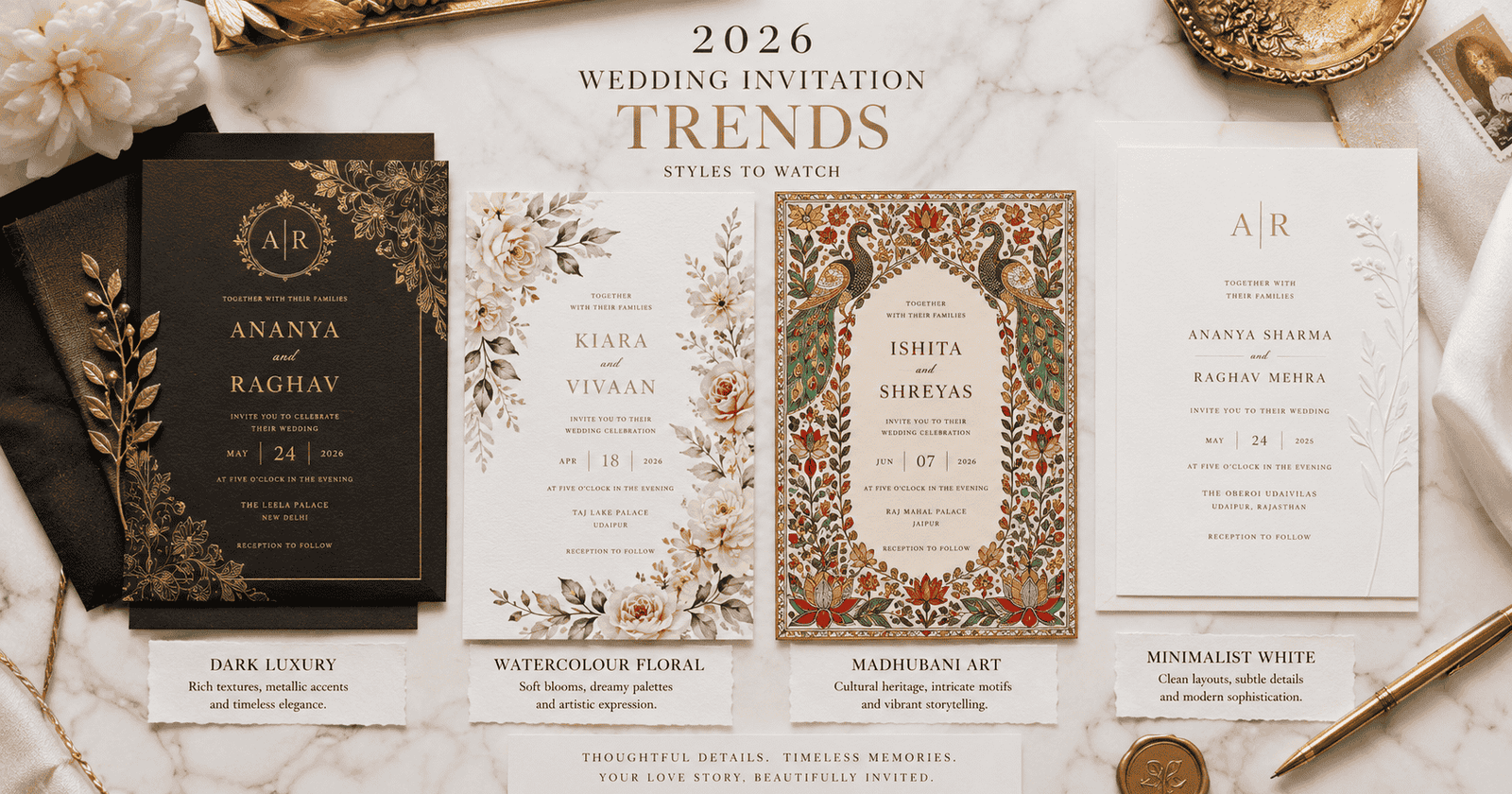
Many of the most celebrated Indian wedding invitations in 2026 blend both aesthetics:
- Modern, clean layout with one traditional cultural element (a single lotus, a Ganesha monogram, a minimalist paisley border)
- Traditional colour palette (gold + deep red) executed with modern typographic sensibility
- First-person language with a cultural opening line in the regional language
- Traditional content (all ceremonies listed, family names included) in a modern visual format
How to Decide
Ask these five questions:
- Who is your primary guest — elders and family, or peers and friends?
- Is your wedding arranged or love marriage? (Doesn't determine the style, but informs expectations)
- What is your venue — traditional banquet hall or boutique hotel?
- How important are religious elements to your family?
- Are you printing or going digital-only?
Create Your Own Invitation in Minutes
Whether you want modern, traditional, or a beautiful fusion, einvits.com has templates for every style. Browse 100+ Indian wedding invitation designs and create your perfect invitation in minutes. Free to get started.
Get Started FreeFinal Thoughts
Modern vs traditional is ultimately about values — what you want to communicate about your wedding before anyone walks through the door. Traditional says: "This is a family occasion, rooted in our heritage." Modern says: "This is our celebration, and it looks like us." The best weddings in 2026 are honest about who they are — and their invitations reflect that authenticity, whatever style it takes.